
Business
Dutch child survivor of Japan’s WWII camps breaks silence

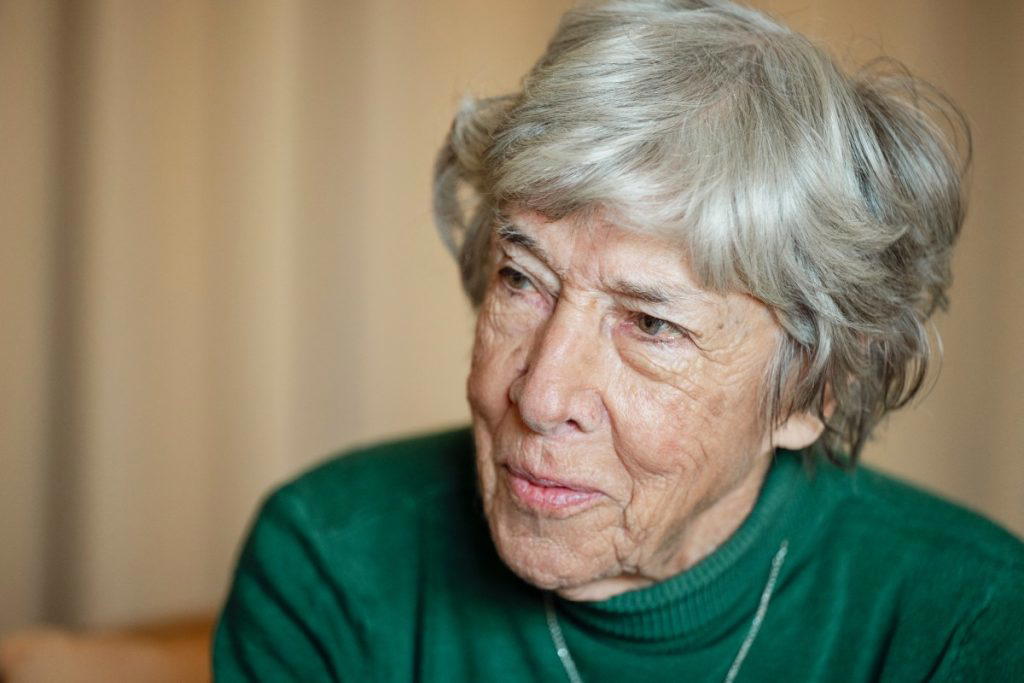
It has taken Tineke Einthoven 80 years to be able to speak about what she lived through as a child in brutal Japanese internment camps during World War II without breaking down.
“Now I can talk about it without crying,” said the Dutch woman who was four when she and her family were captured and held in “horrible” conditions in a camp on the Indonesian island of Java.
Her three-year nightmare began early in 1942, a few months after the Japanese attacked the US naval base at Pearl Harbor in Hawaii.
“There was a lot of bombing and the Japanese arrived. We had dug a big hole in the garden to shelter my parents, my brother and my two sisters, as well as the family of our servants,” the 87-year-old psychologist recalled, speaking publicly for the first time about the ordeal.
Indonesia was a Dutch colony at the time, and Imperial Japan was keen to get its hands on its oil fields and rubber plantations.
The Japanese separated her father, Willem Frederik Einthoven, from the rest of the family, and they did not hear from him for a year.
The son of Nobel Prize winner Willem Einthoven, the inventor of the electrocardiogram, he was an engineer who headed Radio Malabar, the communications link with the Netherlands, but he refused to collaborate with his captors.
– One in 10 perished –
His wife and children were sent to a camp in Tjibunut, near Bandung, where they were held with thousands of other Dutch, British and Australian civilians.
The vast majority of the 130,000 Allied civilians held by the Japanese during the war were Dutch, with more than one in 10 dying in the camps.
The fact that there were more than twice as many Dutch civilians as military prisoners of war has meant that their ordeal is more “vivid in Dutch collective memory”, said historian Daniel Milne of the University of Kyoto.
“We often had nothing more than a bit of rice to eat,” said Einthoven.
“Since I was the smallest, I would slip under the fence to find food outside the camp, but I could only get weeds,” Einthoven added. Parents were punished if a child was caught. “We risked the death penalty.”
“We suffered from hunger, lack of water, the heat, a total lack of hygiene and hours spent under the sun being counted and recounted.”
One of Einthoven’s friends named Marianne, to whom she had given a doll, died of diphtheria.
“I wondered if that doll would also cross to the other side; it was my first questioning of death,” she said.
– Convoys bombed –
Then, in January 1944, the family was reunited and deported to Japan, where the Japanese military wanted her father and his team to invent a radar system.
During the journey, their convoy was bombed by the Americans, but their ship was spared. Many were not so lucky, with thousands of Dutch POWs perishing on the voyage, their ships sunk or torpedoed.
The 60 or so camps that held “some 1,200 civilians in Japan” are little known, said Mayumi Komiya of the POW Research Network Japan.
Some of the prisoners did not survive, including Tineke’s father, who died of pneumonia at 51, weakened by the lack of food and the long march to the laboratory that had been set up for him.
The family was then sent to a temple 300 kilometres (185 miles) west of Tokyo, where they survived in isolation.
They heard about Emperor Hirohito announcing Japan’s surrender on August 15, 1945 from “some Italians, who were also prisoners not far away. One of them threw himself into my mother’s arms, and she was very embarrassed,” Einthoven recalled.
She still remembers licking soup off rocks with other children from cans that had shattered during a failed American parachute drop to them.
Repatriated via Australia to the Netherlands, Tineke worked after the war as a psychologist in Geneva, Nice in France, and neighbouring Monaco, and had two children.
But she never shared her experiences of those years with anyone beyond her family.
“I am speaking out today to show that even if one has lived through something horrible, one doesn’t have to suffer your entire life. You can move on if you choose to free yourself from the victim status,” she said with a smile.
The post Dutch child survivor of Japan’s WWII camps breaks silence appeared first on Vanguard News.
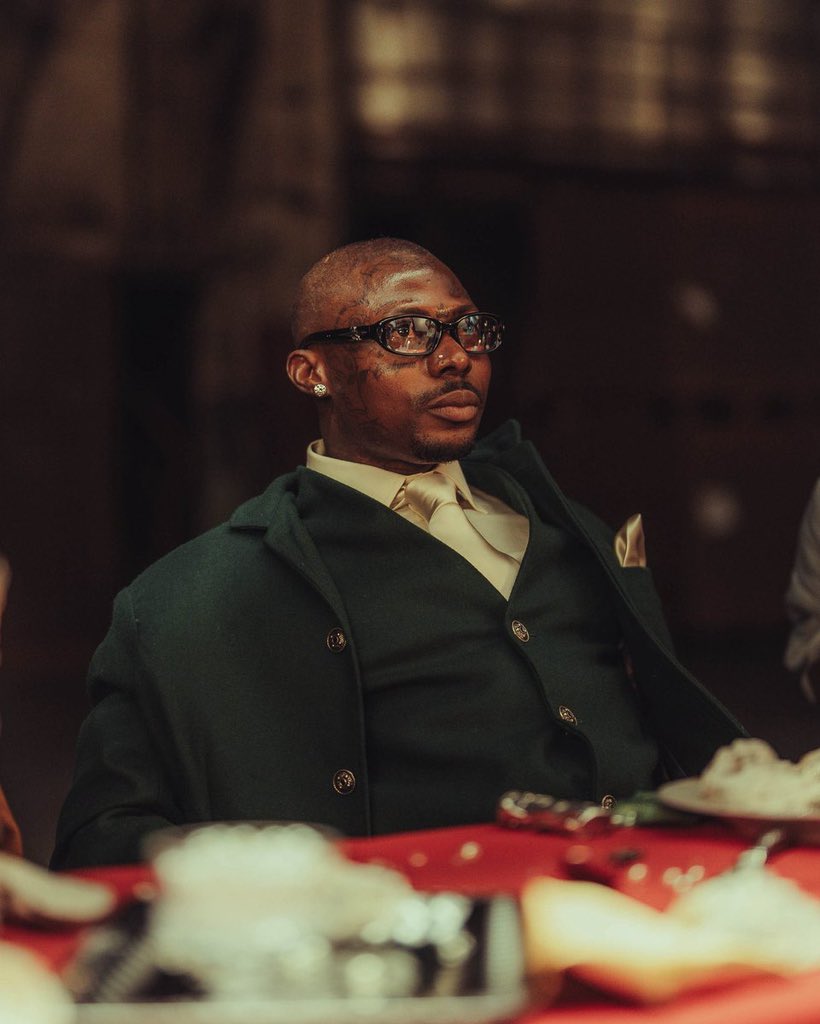
Ásake’s much-anticipated homecoming concert may be heading into stormy waters as fans take to social media to criticise the staggering ₦300,000 ticket fee.
What was expected to be a triumphant Lagos return for the global Afrobeats star is now spiralling into an online revolt, with many longtime supporters accusing organisers of “pricing out the true fans.”
The sentiment has grown so intense that several fan pages are warning that the high-end pricing could dampen excitement around Ásake’s headline performance.
FlyTime Fest, known for premium concert experiences, has steadily increased its fees over the years, but this latest jump appears to have crossed a psychological line.
Fans have flooded social media with criticism over the ₦300,000 ticket price for Ásake’s Lagos homecoming. Many expressed disbelief and frustration, saying the cost is outrageous and out of reach for those who have supported him since his early street-pop days.
Users questioned the pricing compared to international shows, with some noting that fans abroad can secure seats for less than half the cost.
Social media reactions have been fierce, @Yemmmmie_: “So Nigerians are paying $200 just to stand and watch Asake, while people abroad get seats for under $100? Make it make sense. How do you overcharge the people who actually built the fanbase? It’s giving ‘exploit your own’ and everyone’s just supposed to smile about it?”
@_ayzo: “I really wanted to go for Asake’s show but 300k is too ridiculous.”
@_blondehoe: “Asake ticket prices are ridiculous. Not even Chris Brown, Summer Walker and Travis Scott were this expensive. I might need a Nigerian bf to buy me a ticket soon.”
@richtosho: “Asake concert standing ticket is 300k, Rema 250k, Davido 250k, in a country of particular concern… but they will sell tickets in US for less than $100 ~150k and you might even see Chris Brown and Billie Eilish + 10 other artists… imagine?”
The post Asake’s Lagos concert faces backlash as ₦300k ticket price sparks fan outrage appeared first on Vanguard News.
MTV kick-started a new era of music and pop culture in 1981, when it went on air for the first time, emblematically playing “Video Killed the Radio Star” as its debut music video. More than four decades later, the channel,
The post MTV to close international music channels, ending four-decade era appeared first on The Guardian Nigeria News – Nigeria and World News.
Senate President, Godswill Akpabio, has described himself as the highest-ranked Christian in government, attributing his political advancement to “the special grace of God” and urging Nigerians to remain committed to service in their faith communities. Speaking on Saturday during the
The post If God raised me from nobody to Senate president, He can do it for us all – Akpabio appeared first on The Guardian Nigeria News – Nigeria and World News.
-

 Entertainment11 months ago
Encourage your mothers to join TikTok – Ayra Starr’s mum tells Nigerians
-

 Entertainment11 months ago
Ogun govt frowns at Portable’s rascality
-

 Sports11 months ago
Today Bet tips
-
 Entertainment11 months ago
‘I’m federal government liability’ – Portable begs Tinubu’s intervention in case against Ogun
-

 Sports11 months ago
Bundesliga: Tella scoops Bayer Leverkusen’s Goal of the Month
-

 Entertainment11 months ago
‘I’m a feminist but I don’t support disrespectful wives’ – Funke Akindele
-
 News11 months ago
Abuja: Accommodation seekers share nerve-racking experiences, knock house agents
-

 News11 months ago
Dangote Refinery reduces diesel price